Five New Rules of Sustainable Style That Actually Make Sense
Where the old model broke down
People bought five times more clothing in 2018 than in 1980. The average garment is now worn seven times before being discarded, a decline of thirty-six percent compared to fifteen years ago. Meanwhile, twenty percent of everything hanging in a wardrobe never gets worn at all. The fashion industry loses an estimated five hundred billion dollars annually to under-utilization of clothing alone. That figure doesn’t describe an environmental crisis. It describes an efficiency problem with a very practical solution.
The phrase “sustainable style” has accumulated so much vague goodwill that it’s started to mean nothing. What it actually comes down to is use rate: how many times does each item get worn before it leaves your life? That number, multiplied across a wardrobe, is where the real story lives.
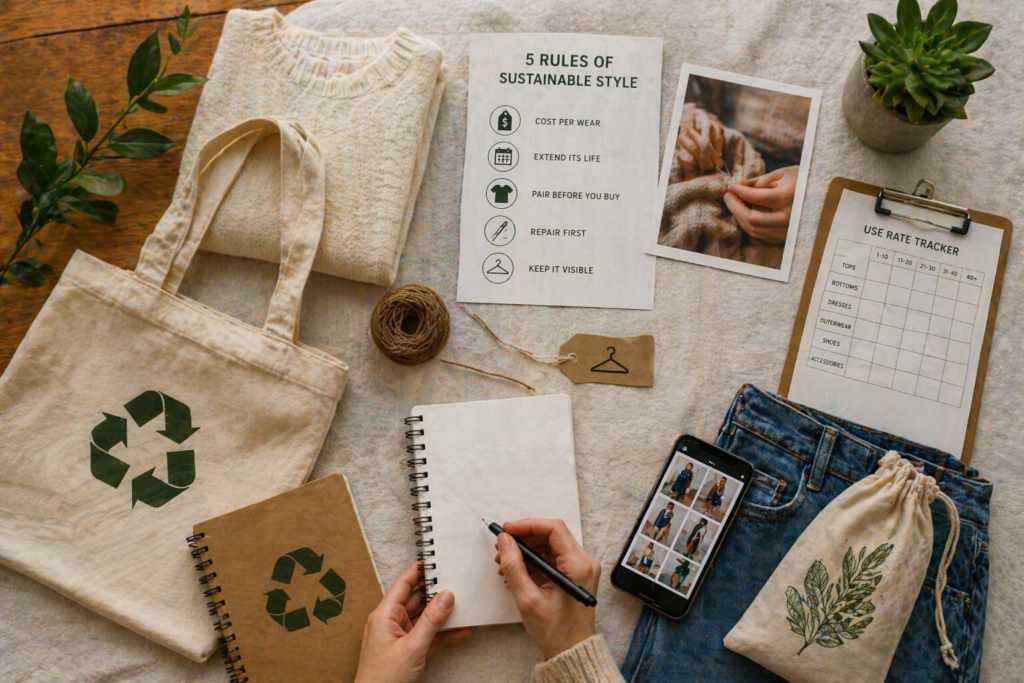
Five Rules Worth Following
Someone scrolling through 1 kıng on a Tuesday night and an Instagram haul video are competing for the same attention. Both lead to impulse decisions that wardrobes don’t need. The five rules below work against that current:
- Cost-per-wear over sticker price: A forty-dollar shirt worn twice costs twenty per wear, a hundred-and-twenty-dollar shirt worn sixty times costs two per wear – the math reframes what “expensive” means.
- The nine-month rule: Extending a garment’s active use by just nine months reduces its carbon, water, and waste footprint by twenty to thirty percent, according to the Ellen MacArthur Foundation.
- No purchase without a pairing plan: Every new item should combine with at least three things already owned. If it can’t, it doesn’t belong in the cart.
- Repair before replace: Doubling the number of times each garment is worn could cut greenhouse gas emissions from clothing by forty-four percent globally.
- Visible wardrobe, deliberate wardrobe: Items stored in opaque boxes or packed at the back of shelves get forgotten, out of sight genuinely means out of rotation.
These rules are not about restrictions. They’re about closing the gap between what someone owns and what someone actually wears. A wardrobe of forty well-used pieces outperforms a wardrobe of two hundred neglected ones by every measure: cost, environmental impact, and daily convenience.
The Shift That’s Already Happening
Forty-two percent of millennials say they’ve purchased a fashion item they never wore. Half of all consumers say they would buy more sustainably if it were easier to access. The demand for a different approach is real. The friction is in habit, not intention.
ThredUp’s 14th annual Resale Report, available at thredup.com/resale, found that the global secondhand market has reached $393 billion, growing twice as fast as the rest of the fashion industry combined. Gen Z and Millennials are projected to drive seventy-one percent of all market growth through 2030, reshaping what “sustainable style” means in practice for the next decade.
Mircari Quotes And Sayings
 KMSpico Download: How It works, How to download and Why you should be careful
 Weekend Gaming with Friends? Here’s the Setup You Need
 The Timeless Appeal of Automatic Watches: Why They Still Matter Today
 AOMEI Partition Assistant Review: Simplify Disk Management for Windows 11
 Why Settle for Boring? Building Features That Make Life More Fun
 Best Indoor Seeds: High-Yield Indoor Strains for Every Grower
 Modern Loneliness and the Rise of Paid Companionship Services
 The Comfort Routine People Are Turning To This Year