Tier 3 Data Center Colocation: What changes for your IT team after leaving the server room
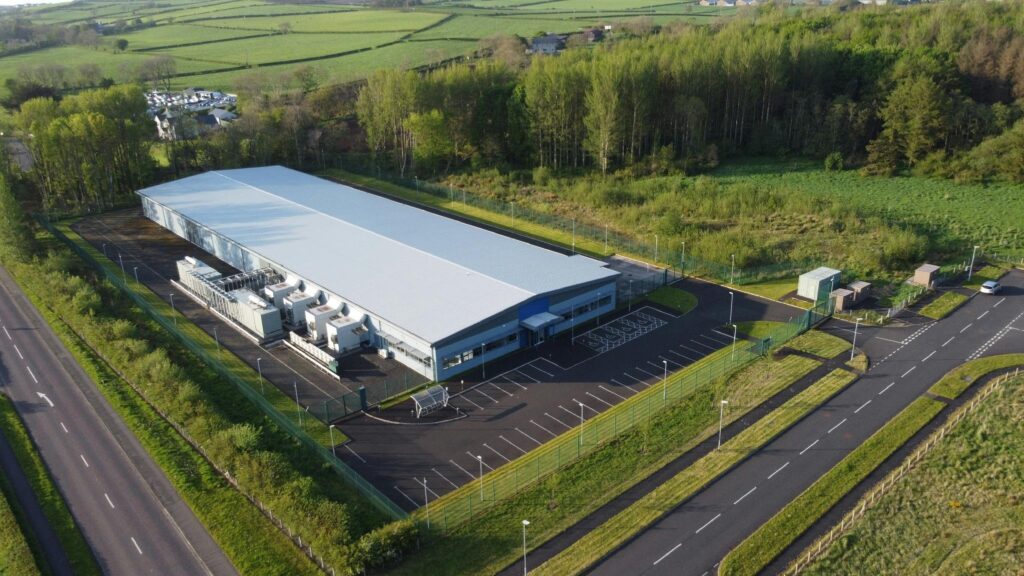
Moving to a tier 3 data center colocation environment might look like nothing more than relocating your servers. In reality, it fundamentally changes the way your IT operations are run. Your team no longer has to worry about power, cooling, or facility monitoring, freeing up time for applications, security, and strategic projects. Let’s dig deeper into how your IT team’s responsibilities change after the move. We’ll also look at how to tell when your server room is no longer serving your business.
Most corporate server rooms started out as a stopgap that nobody ever got around to replacing. Air conditioning got bolted on as the machine count grew, the backup power supply still remembers the vendor before last, and the one person who actually knows what’s going on in that room has fifty other things on their plate. Before we look at what changes after the move, it’s worth looking at how much of your IT team’s time that room quietly consumes.
What does it really take to run a server room?
The workload a server room creates never fits into a single ticket:
- Temperature and humidity – sensors, alarms, and the on-call phone that rings on a Saturday morning.
- Power – checking backup power, battery age, generator tests, assuming a generator even exists.
- Physical security – who holds the key, who’s been in the room, and whether the camera is actually recording.
- Fire protection and documentation that nobody remembers until an audit shows up.
None of those items move corporate IT forward. They belong to a building manager, not an engineer – except in a smaller company, that’s the same person. The result is a team spending half its capacity keeping the environment running, and the other half on the work they were actually hired to do.
Tip: You’ll find the parameters of certified Tier 3 colocation – redundancy, guaranteed uptime, and the migration process – laid out clearly here.
How Tier 3 data center colocation changes day-to-day operations
Uptime Institute’s Tier III certification doesn’t rest on a single number, but on a single property: concurrent maintainability. The data center has redundant components and redundant distribution paths, so a technician can take down any part of the power or cooling system, swap it out, and the servers keep running the whole time. That’s exactly what a company’s own server room can’t do – there, any intervention in the power distribution panel means a scheduled outage and an email to sales.
For the IT team, this changes the nature of the work itself. Temperature, humidity, and power status are tracked by the data center’s round-the-clock staff, not by internal monitoring that escalates to someone’s phone. Access to the space is controlled by multi-layer access controls, with every entry logged and camera footage archived. The operator also guarantees uptime contractually, so responsibility for the environment shifts to the provider – and the IT team no longer has to personally shoulder that responsibility.
The pace of growth changes too. Expanding capacity in your own server room runs into the limits of the breaker, the air conditioning, and sometimes the floor itself. In a data center, it’s a matter of ordering another cabinet and additional power capacity – which takes days instead of quarters.
What your IT team gets back
The freed-up capacity doesn’t disappear but gets redirected. Instead of inspections and midnight alarms, the team focuses on application management, patch management, identity management, backup strategy, and security architecture – the work nobody else in the company can do.
The data backs this up. According to Uptime Institute’s Annual Outage Analysis 2026, the most recent significant outage cost 57% of organizations more than $100,000, while one in five reported losses exceeding $1 million. Power remains the leading cause, specifically failures of UPS systems, switchgear, and generators. This is exactly the responsibility that data center colocation takes over, backed by redundant infrastructure and round-the-clock operations.
When tier 3 data center colocation makes sense
The same warning signs appear across organizations:
- Your server room has reached its power or cooling limits, and expanding it would require construction work.
- Your office space is more valuable as workspace than as a server room.
- An audit, NIS2, or customer requirements demand demonstrable physical security.
- Your IT team spends evenings and weekends keeping the environment running instead of managing the systems.
Infrastructure migration is carried out in phases and during pre-approved maintenance windows, keeping downtime to minutes instead of an entire weekend. The provider then guarantees uptime contractually, typically 99.982% in a certified Tier 3 environment.
A server room never quietly disappears from the budget. It comes back as a hardware failure, an audit finding, or the resignation of the one person who knew where the main breaker was. That’s why the best time to move is while everything is still running smoothly. Ask your IT team – they already know the answer.
Mircari Quotes And Sayings
 Why Settle for Boring? Building Features That Make Life More Fun
 Best Indoor Seeds: High-Yield Indoor Strains for Every Grower
 Modern Loneliness and the Rise of Paid Companionship Services
 The Comfort Routine People Are Turning To This Year
 What It Actually Takes to Restore a High-Pressure System Back to Full Strength
 Syna World Shorts Set – Summer Style Redefined
 8 Top SASE Vendors Offering Comprehensive Network Protection
 The Golden Rules of Evening Fashion: How to Stand Out Without Overdoing It