Why traditional column radiators are still a stylish choice for modern homes?

You know how, in a modern refurb, everything can look sharp until you spot the heating and it feels like a leftover from another decade? A traditional column radiator is one of the few upgrades that solves that tension, it looks intentional in contemporary rooms while still feeling “right” in older homes.
At Planet Radiators, we see the same pattern again and again: people want the character of columns, but they also want choices that suit modern interior design, from slim vertical layouts to low horizontals under windows and blinds.
This page shows you how to pick the right look and the right performance, including how to size by BTUs, what to expect from hot water systems (boilers and heat pumps), and where electric column radiators can make sense for zoned control.
Key Takeaways
- Column radiators keep their period shape, but they work in modern rooms thanks to clean lines and strong finishes like white, anthracite, raw metal and antique brass.
- Watch the test conditions behind BTU figures: most UK outputs are quoted at ΔT50, and lower-temperature systems (like heat pumps) can need larger radiators for the same room comfort.
- A real-world sizing reference: a 600mm x 605mm horizontal 2-column model is commonly listed at 2131 BTU (625 W), while an 1800mm x 560mm vertical 3-column model can reach 6920 BTU (2028 W).
- If you are comparing BTUs and watts, use a quick sense-check: 1 watt is about 3.41 BTU per hour, so the numbers should broadly line up.
- For electric column radiators on off-peak tariffs, check your off-peak window with your supplier, and make sure your meter setup supports it, especially if you have older day/night metering.
Timeless Aesthetic Appeal
Column radiators bring a confident, architectural look to a room. You get the familiar rhythm of vertical columns, but the overall shape still reads “modern”, especially in matt finishes and crisp, squared-off installations.
The trick is to treat the radiator like a designed object, not an afterthought. When you match finish, valve style, and placement to the rest of the space, it becomes a focal point that earns its wall.
Classic designs for modern interiors
In contemporary layouts, a column radiator works best when you plan it around sightlines and furniture, the way you would with lighting. A tall vertical radiator can frame a chimney breast, balance a media wall, or give a hallway a deliberate “end point”.
If your radiator sits under blinds, keep airflow in mind. Designers commonly recommend that curtains finish a few centimetres above the radiator (around 3 to 4cm) so the heat can circulate into the room rather than pooling behind fabric.
- Minimalist rooms: pick a slim 2-column profile in white or anthracite, then keep valves understated.
- Industrial schemes: raw metal or dark grey finishes look intentional against brick, concrete, or black-framed glazing.
- Bathrooms: a traditional towel radiator keeps the column feel, but earns its keep on towel drying too.
- Period homes with modern updates: keep the column shape classic, then modernise with clean-lined valves and a flatter sheen.
Versatility in colour and finish options
Finish is where traditional columns stop feeling “old-fashioned”. White is still the easiest match for skirting, architraves, and ceilings, while anthracite is a go-to for modern kitchens and open-plan spaces because it visually anchors the wall.
Many UK ranges now treat colour as a core option, not a special request. For example, one widely stocked colour range is offered in 18 popular shades and 62 size options, so you can keep a consistent look as you move from room to room.
Choose the finish first, then size for heat. If you do it the other way round, you often end up “accepting” a radiator instead of designing with it.
- White: best for bright rooms, panelling, and traditional trim details.
- Anthracite: strong contrast in pale schemes, great with black hardware and dark window frames.
- Raw metal: a natural fit with exposed brick and timber, especially in loft-style interiors.
- Antique brass: pairs well with brass taps, warm neutrals, and heritage colour palettes.
Enhanced Functionality and Efficiency
Column radiators do not just “look” traditional, they also deliver a very usable heat profile. The extra surface area in multi-column designs helps produce both radiant warmth (the comfortable, direct heat you feel) and convicted heat (the warm air movement that evens out a room).
If you want efficiency you can feel, focus on controls and sizing. A thermostatic radiator valve (TRV) helps you stop overheating rooms, and correct BTU sizing avoids the cycle of blasting the heating then turning it down.
Effective heat distribution
Surface area is the practical advantage of columns. More columns and more width generally mean more output, which is why column radiators are often chosen for larger rooms and higher ceilings.
As a reference point from commonly listed UK models, a 600mm x 605mm horizontal 2-column radiator is often shown at 2131 BTU (625 W). Step up to a larger vertical statement piece, and an 1800mm x 560mm 3-column radiator can be listed at 6920 BTU (2028 W).
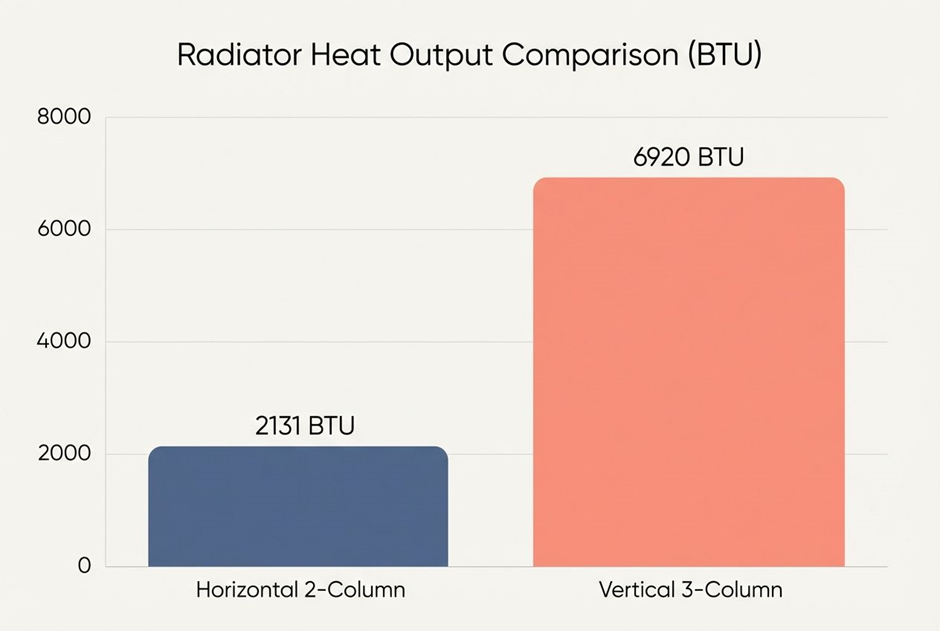
| Example size and style | Typical listed output | What that means for you |
| 600mm x 605mm horizontal, 2-column | 2131 BTU (625 W) | A sensible choice for smaller rooms or as a “second radiator” in longer spaces. |
| 1800mm x 560mm vertical, 3-column | 6920 BTU (2028 W) | Better for big living rooms and open-plan areas where you want strong output without using a long stretch of wall. |
When you compare suppliers, make sure you compare like-for-like test ratings. If one listing uses ΔT50 and another uses a higher delta, the BTUs can look better on paper but disappoint once installed.
Eco-friendly heating solution
“Eco-friendly” with radiators really means two things: you run your system at sensible temperatures, and you control heat room by room so you only pay for comfort where you need it.
Heat pumps are the big example. Many air-source heat pump setups run lower flow temperatures than boilers, with space heating often designed around roughly 35°C to 45°C flow, while domestic hot water usually needs higher temperatures, commonly around 55°C.
- If you are moving to a heat pump: plan to upsize radiators, or choose deeper multi-column options, so you can keep flow temperatures lower and efficiency higher.
- If you stay on a boiler: reducing boiler flow temperature can improve efficiency in many homes, and UK consumer advice often points to around 60°C as a practical target, depending on your system and comfort.
- If you go electric in some rooms: electric column radiators can make sense for targeted zones, like an office or loft conversion, where you want heat on demand without warming the whole house.
If you are using off-peak electricity for electric heating, Ofgem notes that Economy 7 commonly provides seven cheaper hours overnight (often midnight to 7am, though times vary by area and supplier). They also warn that older Radio Teleswitch metering is being phased out area by area, so it is worth confirming your meter type if you rely on timed heating or hot water.
Durability and Longevity
A good column radiator should feel solid because it is. Most modern column models use steel construction and durable paint systems, which is why they work well as everyday family heating, not just as a style feature.
Longevity is also about what comes with it: proper brackets, bleed valves, and a clear warranty. In UK listings, it is common to see warranties from around 5 years on some ranges, with 10-year and even 20-year guarantees available on others, so it pays to check before you buy.
High-quality materials
Mild steel is the standard material for many column radiators because it balances heat transfer, strength, and cost. You will also see many suppliers highlight steel thickness, with 1.5mm steel frequently listed on product specifications for added rigidity.
For performance and honest comparisons, look for radiators tested to BS EN 442 (the standard used to rate outputs). This matters because it ties the BTUs and watts back to a defined test method, instead of marketing claims.
- Ask for the delta rating: ΔT50 is the common UK benchmark for listed outputs.
- Check pressure limits: some ranges list a 10 bar maximum working pressure, which is useful reassurance on sealed systems.
- Confirm what is included: brackets, bleed valve, and blanking plug should be standard, not an extra.
Durability is rarely about one “magic” feature. It is steel quality, a proper finish, and the right fixings working together.
Low maintenance requirements
Column radiators are straightforward to live with. Dust them regularly, especially between the columns, because dust build-up reduces heat transfer and can create a slight “warm dust” smell when the heating first comes on.
Bleeding is the other simple win. If the top of the radiator feels cooler than the bottom, trapped air is often the reason, and bleeding restores full output quickly.
If your radiator sits on an external wall, consider a proper radiator reflector panel behind it. Energy Saving Trust guidance suggests reflector panels on uninsulated external walls can save around £25 a year in Great Britain, and they are not usually worth fitting on internal walls.
Perfect for Various Spaces
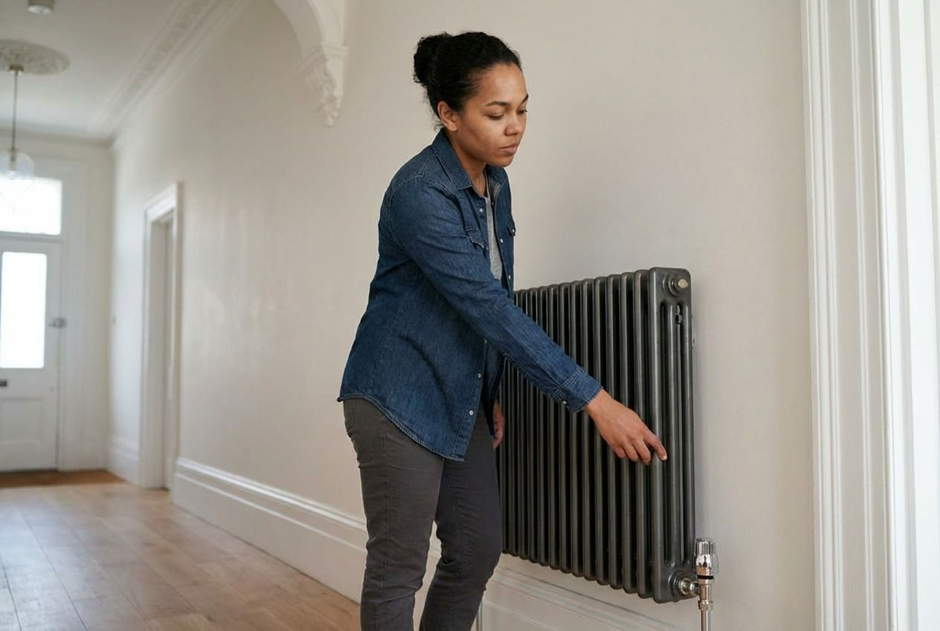
Column radiators suit awkward rooms because you can choose the orientation that fits the wall, then choose the depth and width that delivers the BTUs you need.
Suitable for period homes and modern layouts
In Victorian and Edwardian homes, columns help you keep the character while improving comfort. Their form looks at home with high ceilings, bay windows, and original joinery, especially in white or softer heritage shades.
In modern interiors, the same radiator becomes a sculptural feature. Anthracite and raw metal finishes work particularly well with minimalist walls because the radiator reads like a vertical design element, not a utility box.
- Living rooms: larger multi-column models suit bigger heat loads and longer occupancy.
- Hallways: a tall vertical radiator can add warmth without sacrificing walk-through space.
- Kitchens: pick finishes that tolerate busy environments, and keep clear access to TRVs for quick adjustments.
- Bathrooms: traditional towel radiators add daily functionality in compact spaces.
Options for vertical and horizontal designs
Orientation is your first layout decision. Horizontal models still make sense under windows, while vertical models are perfect when glazing, doors, or furniture steal the long wall runs.
UK ranges commonly cover compact sizes from around 300mm tall, and they can reach statement heights of 2000mm or more, with widths stretching well beyond 1500mm on some ranges. For a clear “entry price” reference, slim 600mm x 249mm horizontal 2-column models are listed from £79.99 on some UK retail lines.
| Design | Best placement | Why it works |
| Horizontal column radiators | Under windows, along long walls | Classic placement for even heat and simple pipe routes. |
| Vertical column radiators | Hallways, narrow wall sections, open-plan feature walls | High output without taking up a long run of wall space. |
If you are shopping for cheap designer radiators, do not let price be the only filter. Compare BTUs at the same delta rating, check what fixings are included, and confirm delivery lead times before you commit.
Conclusion
A traditional column radiator is still a strong choice for UK homes because it solves both sides of the brief: it looks stylish, and it performs.
Choose your finish to suit your interior design, plan around blinds and soft furnishings so heat can circulate, then size properly by BTUs for your room and your hot water system.
If you want help narrowing options, Planet Radiators can guide you through outputs, layouts, and the small details (valves, sheen, and spacing) that stop radiators feeling like an afterthought.
Order today for free or next-day delivery on orders over £59 if placed by 3pm, and you can also use the price match guarantee and 90-day returns for extra peace of mind.
FAQs
1. What makes traditional column radiators a stylish choice for modern homes?
Traditional column radiators give rooms a classic look, they add height and texture. They work well in modern homes, matching old charm with new function.
2. Do traditional column radiators heat efficiently?
Yes, many modern versions give good heat efficiency and steady warmth.
3. Are they hard to fit in new or tight spaces?
No, installers fit them to walls or floors, to suit the room. Many are made from metal, so they last and stand up to daily use. Pick a slim profile to save space and keep the stylish look.
4. Can I use traditional column radiators with modern heating systems?
Yes, they work with boilers and heat pumps, and they suit modern controls. They also suit period properties, while fitting into contemporary rooms.
Mircari Quotes And Sayings
 Blue Wall Paint Trends and Tips: Choosing the Perfect Wall Paint
 How A San Antonio Injury Lawyer Can Help You After An Accident
 Common Car Wreck Injuries
 How to Make Your Cornhole Games More Fun with Themed Bags
 Alexander Ostrovskiy: 10 Glute Exercises You’re Not Doing (But Should Be)
 Can video games replace traditional teaching methods?
 Top 5 Tension Fabric Display Suppliers in Singapore
 How to Focus on Studying for Successful Admission